Prostate Removal Side Effects: The Dark Reality Urologists Hide
Thomas Reed
Senior Health Analyst
Updated: March 12, 2026 | 5 Mins Read
You are sitting in a cold, sterile urology clinic, staring blankly at a dense, multi-page surgical consent form.
Your doctor just patted you on the shoulder, smiling reassuringly as he called the operation to remove your gland a “quick and safe” solution to your urinary nightmares. He promises you will be back on the golf course in no time.
But deep down in your gut, an alarm bell is ringing loudly. Something feels terribly wrong.
You know you need to do your own independent research before letting a surgeon anywhere near your pelvis. Let me assure you as an investigative health reporter: your intuition is absolutely right.
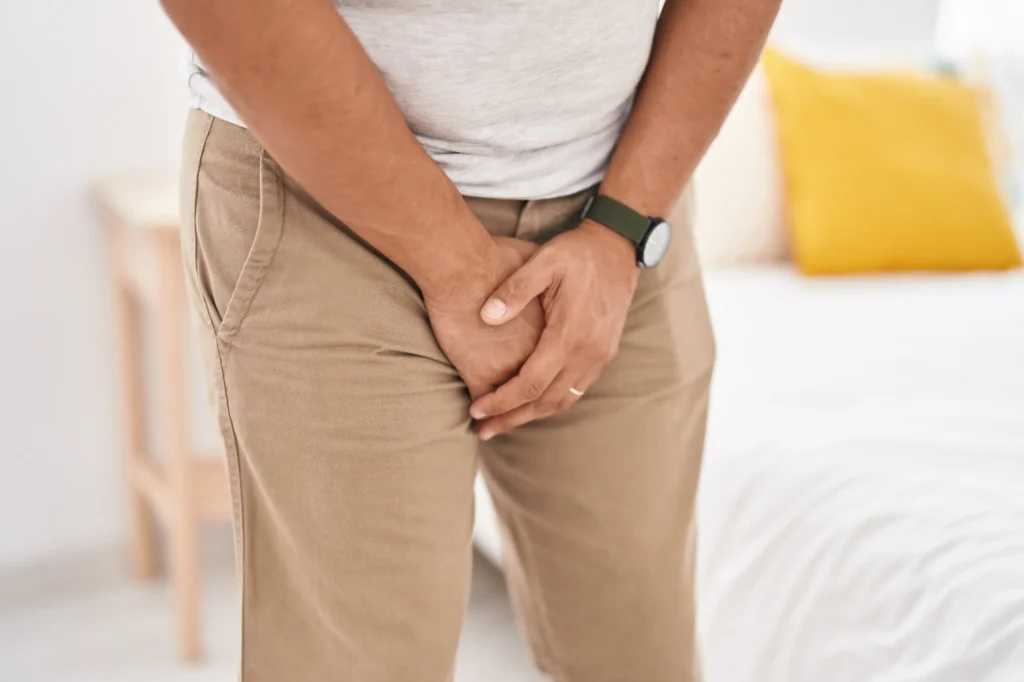
Before you sign that consent form, you need to understand the true prostate removal side effects that rarely make it into the cheerful hospital brochures.
The "Routine Procedure" Myth: What They Don't Tell You
The modern medical system is a well-oiled, profit-driven machine. To keep the gears turning and the billing departments happy, surgeons often downplay the severe reality of removing a vital reproductive gland.
They pitch it to vulnerable, exhausted men as a simple, everyday “routine procedure.” But there is absolutely nothing routine about cutting into the male pelvic floor.
This area is one of the most anatomically complex and delicate regions in the entire human body. Your prostate is completely surrounded by a microscopic, densely packed web of vital nerves and blood vessels.
Whether the surgeon uses a traditional scalpel or a multi-million-dollar robotic arm, the margin for error is terrifyingly small. Just one millimeter of miscalculation, a slight slip, or a tiny burn from the high-voltage cauterizing tool can alter the course of your life forever.
You are not a machine getting a simple oil change. You are a man risking his fundamental biological functions on an operating table.
The Lifetime Sentence of Adult Diapers (Incontinence)
Let’s attack the first devastating reality that surgeons quickly gloss over during your brief consultation.
Most men wake up in the recovery room believing that their weak stream, the painful pressure, and the exhausting midnight bathroom trips are finally over. They expect a few weeks of uncomfortable recovery, maybe some temporary leaking, and then a return to normal life.
The brutal truth is far darker. During the removal of the gland, the intricate muscles and sphincters that control your bladder are frequently traumatized, stretched, or permanently damaged.
This isn’t just a matter of wearing a small, discreet pad for a month. For thousands of trusting men, the “cure” results in severe, irreversible incontinence.
Imagine the sheer, daily humiliation of realizing you have completely lost control of your own bladder. Imagine the psychological toll of being forced to wear thick adult diapers 24/7, smelling like a public restroom, and being terrified to laugh, cough, or leave your house.
Instead of gaining freedom, these men are imprisoned by their own bodies, forever tied to the humiliating reality of urinary leakage.
The End of Intimacy (Irreversible Impotence)
If losing control of your bladder wasn’t enough to make you pause, the second major side effect attacks the very core of your male identity.
We are talking about the complete and sudden destruction of your intimate life.
Because your prostate is physically intertwined with the fragile nerve bundles responsible for creating and maintaining an erection, removing it is an incredibly violent event for your reproductive system.
When the gland is ripped out, these vital nerves are almost always bruised, crushed, or completely severed. This catastrophic nerve damage leads to astronomically high rates of permanent, irreversible impotence.
Your urologist might proudly tell you that the surgery was a “success” and that he “saved the surrounding tissue,” but you are left completely unable to perform in the bedroom.
This brutal physical castration destroys your confidence. It creates a wall of ice between you and your partner, forces you into the “spare bedroom exile,” and silently tears loving marriages apart.
Are You Being Rushed to the Knife for the Wrong Reason?
The most tragic part of this entire medical trap is that many of these life-destroying surgeries are completely unnecessary.
The medical establishment has mastered the art of using your deepest, darkest fears as a weapon of compliance. They show you a high PSA score or an ultrasound of a giant, swollen gland, and immediately rush you toward the knife.
But independent clinical research proves that an elevated PSA or a heavy, enlarged gland is very often just a sign of “chronic, silent inflammation”—not an immediate death sentence
Your prostate swells up like a defensive balloon when it is under attack by environmental toxins or infections. It is inflamed, irritated, and exhausted.
Yet, traditional medicine rushes to completely amputate an entire organ rather than treating the actual root cause of that initial inflammation.
Surgically removing a vital gland just because it is temporarily inflamed is absolute medical madness. It is the exact equivalent of amputating your finger just because it got swollen and red from a deep splinter.
3 Hidden Signs Your Prostate is Just Inflamed (Not Doomed)
Before you let anyone convince you that surgery is your only option, look for these three clinical signs that indicate your gland is fighting an inflammatory battle, rather than a terminal disease:
Sudden Spikes in Discomfort: If your symptoms (like urgency or pelvic heaviness) flare up suddenly rather than progressing slowly over decades, it is a classic hallmark of acute tissue inflammation.
Dietary Sensitivity: If you notice that your weak stream gets significantly worse after consuming heavy caffeine, alcohol, or spicy foods, you are likely dealing with an irritated, inflamed urinary tract reacting to dietary triggers.
Fluctuating PSA Levels: If your PSA numbers bounce up and down between doctor visits, it strongly suggests your gland is fighting off an active, hidden infection, rather than harboring a steady, aggressive cellular mutation.
How to Deflate Your Gland and Escape the Scalpel
You do not have to accept the terrifying risk of daily leaks, the humiliation of adult diapers, and the permanent loss of your intimacy.
Before you surrender your manhood to the scalpel and become another statistic crying on a medical support forum, you must target the real, hidden trigger inflating your gland from the inside out.
Independent researchers recently leaked a highly censored discovery. That massive, stubborn swelling and the constant urge to pee are frequently caused by a stealthy “bacterial parasite” lodging deep inside the prostate tissue.
This opportunistic invader feeds on invisible nanotoxins in our water and air, creating a toxic, highly inflamed environment that forces the gland to swell uncontrollably.
The incredible news is that you can flush this parasite out of your body without a single surgical cut, and without swallowing pills that destroy your testosterone.
A rogue investigative doctor has revealed the bizarre 15-second Blue Jar Trick—a simple, highly effective morning ritual that you can do from home.
This natural protocol aggressively eradicates the hidden bacteria, shrinks the inflamed gland, restores your strong stream, and saves you from the terrifying $30,000 robotic surgery trap.
If you refuse to be left “limp and leaking” by a rushed medical procedure…
Thomas Reed is a Senior Clinical Research Analyst with over two decades of experience in independent urological studies. His mission is to investigate and reveal scientific breakthroughs that the traditional pharmaceutical industry often overlooks, helping men reclaim their vitality naturally.
Disclaimer: The content on this site is for informational purposes only and is not intended as professional medical advice, or diagnosis. Always consult a qualified healthcare provider.
Cinar V, Polat Y, Baltaci AK, Mogulkoc R. Effects of magnesium supplementation on testosterone levels of athletes and sedentary subjects at rest and after exhaustion. Biol Trace Elem Res. 2011 Apr;140(1):18-23. doi: 10.1007/s12011-010-8676-3. Epub 2010 Mar 30. PMID: 20352370
Maggio M, De Vita F, Lauretani F, Nouvenne A, Meschi T, Ticinesi A, Dominguez LJ, Barbagallo M, Dall’aglio E, Ceda GP. The Interplay between Magnesium and Testosterone in Modulating Physical Function in Men. Int J Endocrinol. 2014;2014:525249. doi: 10.1155/2014/525249. Epub 2014 Mar 3. PMID: 24723948; PMCID: PMC3958794
Fallah A, Mohammad-Hasani A, Colagar AH. Zinc is an Essential Element for Male Fertility: A Review of Zn Roles in Men’s Health, Germination, Sperm Quality, and Fertilization. J Reprod Infertil. 2018 Apr-Jun;19(2):69-81. PMID: 30009140; PMCID: PMC6010824
Allouche-Fitoussi D, Breitbart H. The Role of Zinc in Male Fertility. Int J Mol Sci. 2020 Oct 21;21(20):7796. doi: 10.3390/ijms21207796. PMID: 33096823; PMCID: PMC7589359
Neychev V, Mitev V. Pro-sexual and androgen enhancing effects of Tribulus terrestris L.: Fact or Fiction. J Ethnopharmacol. 2016 Feb 17;179:345-55. doi: 10.1016/j.jep.2015.12.055. Epub 2015 Dec 28. PMID: 26727646
Singh S, Nair V, Gupta YK. Evaluation of the aphrodisiac activity of Tribulus terrestris Linn. in sexually sluggish male albino rats. J Pharmacol Pharmacother. 2012 Jan;3(1):43-7. doi: 10.4103/0976-500X.92512. PMID: 22368416; PMCID: PMC3284036
Missassi G, Dos Santos Borges C, de Lima Rosa J, Villela E Silva P, da Cunha Martins A Jr, Barbosa F Jr, De Grava Kempinas W. Chrysin Administration Protects against Oxidative Damage in Varicocele-Induced Adult Rats. Oxid Med Cell Longev. 2017;2017:2172981. doi: 10.1155/2017/2172981. Epub 2017 Dec 19. PMID: 29410731; PMCID: PMC5749274
Srivatsav A, Balasubramanian A, Pathak UI, Rivera-Mirabal J, Thirumavalavan N, Hotaling JM, Lipshultz LI, Pastuszak AW. Efficacy and Safety of Common Ingredients in Aphrodisiacs Used for performance problems: A Review. Sex Med Rev. 2020 Jul;8(3):431-442. doi: 10.1016/j.sxmr.2020.01.001. Epub 2020 Mar 2. PMID: 32139335; PMCID: PMC7340557
Shindel AW, Xin ZC, Lin G, Fandel TM, Huang YC, Banie L, Breyer BN, Garcia MM, Lin CS, Lue TF. Erectogenic and neurotrophic effects of icariin, a purified extract of horny goat weed (Epimedium spp.) in vitro and in vivo. J Sex Med. 2010 Apr;7(4 Pt 1):1518-28. doi: 10.1111/j.1743-6109.2009.01699.x. Epub 2010 Feb 5. PMID: 20141584; PMCID: PMC3551978
Chinnappan SM, George A, Pandey P, Narke G, Choudhary YK. Effect of Eurycoma longifolia standardized aqueous root extract-Physta® on testosterone levels and quality of life in aging male subjects: a randomized, double-blind, placebo-controlled multicentre study. Food Nutr Res. 2021 May 19;65. doi: 10.29219/fnr.v65.5647. PMID: 34262417; PMCID: PMC8254464
Chittur S, Parr B, Marcovici G. Inhibition of inflammatory gene expression in keratinocytes using a composition containing carnitine, thioctic Acid and saw palmetto extract. Evid Based Complement Alternat Med. 2011;2011:985345. doi: 10.1093/ecam/nep102. Epub 2011 Jun 8. PMID: 19692448; PMCID: PMC3137880
Suzuki M, Ito Y, Fujino T, Abe M, Umegaki K, Onoue S, Noguchi H, Yamada S. Pharmacological effects of saw palmetto extract in the lower urinary tract. Acta Pharmacol Sin. 2009 Mar;30(3):227-81. doi: 10.1038/aps.2009.1. PMID: 19262550; PMCID: PMC4002402
Jurikova T, Sochor J, Rop O, Mlcek J, Balla S, Szekeres L, Adam V, Kizek R. Polyphenolic profile and biological activity of Chinese hawthorn (Crataegus pinnatifida BUNGE) fruits. Molecules. 2012 Dec 6;17(12):14490-509. doi: 10.3390/molecules171214490. PMID: 23222867; PMCID: PMC6268084
Dehghani S, Mehri S, Hosseinzadeh H. The effects of Crataegus pinnatifida (Chinese hawthorn) on metabolic syndrome: A review. Iran J Basic Med Sci. 2019 May;22(5):460-468. doi: 10.22038/IJBMS.2019.31964.7678. PMID: 31217924; PMCID: PMC6556496
Stohs SJ, Ray SD. A review and evaluation of the efficacy and safety of Cissus quadrangularis extracts. Phytother Res. 2013 Aug;27(8):1107-14. doi: 10.1002/ptr.4846. Epub 2012 Sep 13. PMID: 22976133
Borrelli F, et al. Herbal dietary supplements for performance problems: A systematic review and meta-analysis. Drugs. 2018; doi:10.1007/s40265-018-0897-3