Natural Approaches to Enlarged Prostate Symptoms: What Actually Works
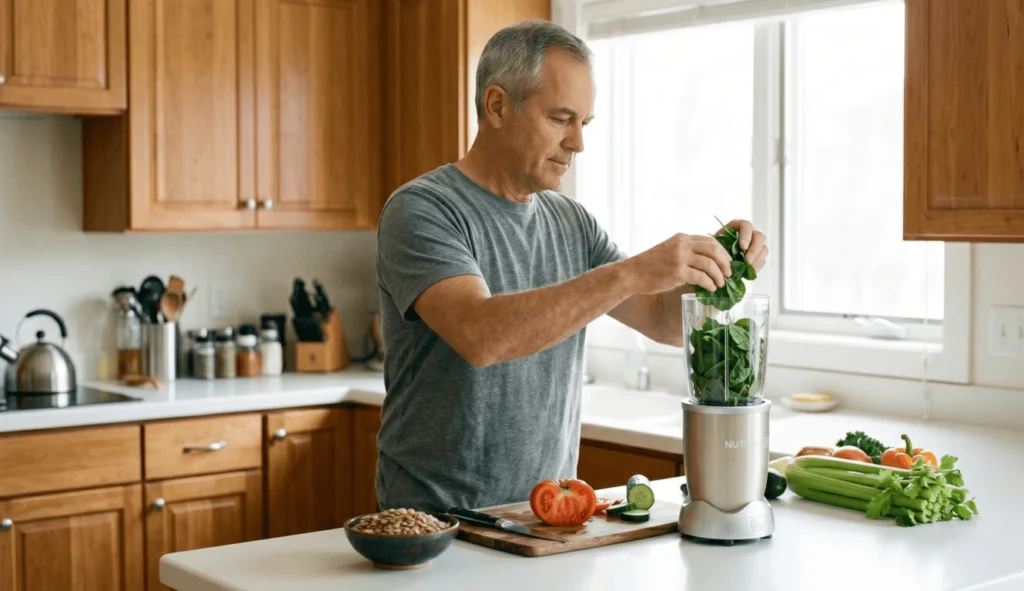
For men looking to support prostate health through daily habits, the kitchen is often the most practical starting point — if they know what the research actually supports.
The search for natural approaches to enlarged prostate symptoms is one of the most common health journeys American men over 50 undertake, and one of the least well-guided. The information available ranges from genuinely useful to completely unsupported, and the gap between those two categories is rarely made clear.
This guide does not promote any specific product or treatment. It reviews the natural and lifestyle-based approaches to BPH symptom management that have meaningful research support, explains what that research actually shows and what it does not, and provides a framework for evaluating the claims that circulate widely in this space.
The goal is not to replace medical care. It is to help men understand which non-pharmacological approaches are worth their time and which are not, so that the effort they invest produces genuine results rather than expensive disappointment.
Why Men Look for Natural Approaches
The reasons men seek natural alternatives to pharmaceutical management of BPH are not irrational. They reflect a reasonable weighing of trade-offs that deserves acknowledgment rather than dismissal.
Prescription medications for BPH are effective for many men, but they carry side effect profiles that are clinically significant and personally relevant. The two main classes of medication used for BPH, alpha-blockers and 5-alpha-reductase inhibitors, can produce side effects including dizziness, reduced blood pressure, decreased libido, and in some cases persistent sexual health changes that outlast the period of medication use. For men whose symptoms are in the mild to moderate range, these trade-offs lead many to ask whether there are approaches that address the underlying condition without those costs.
The answer is nuanced. No natural approach currently available produces results equivalent to pharmaceutical intervention in men with severe BPH or rapidly progressing symptoms. But for men with mild to moderate symptoms, lifestyle-based approaches have meaningful research support and a side effect profile that is, by definition, favorable. They are not a replacement for medical evaluation. They are a legitimate component of a comprehensive approach to prostate health management.
Dietary Changes With Research Support
Diet is the natural approach with the broadest and most consistent research base in the context of BPH. The mechanisms are primarily inflammatory: the foods a man eats regularly influence the degree of chronic inflammation in his body, and chronic inflammation in prostate tissue is now recognized as a contributor to its enlargement over time.
Increasing lycopene intake is among the most consistently supported dietary recommendations in prostate health research. Lycopene is a carotenoid found in highest concentrations in tomatoes, particularly cooked and processed tomatoes. Multiple studies have found associations between higher lycopene intake and lower rates of prostate inflammation and slower prostate growth. The bioavailability of lycopene is significantly higher from cooked tomato products, including tomato sauce, tomato paste, and tomato soup, than from raw tomatoes, because heat processing breaks down the cell walls that otherwise limit absorption.
Men who increase their consumption of cooked tomato products to several servings per week are implementing one of the most evidence-based dietary changes available for prostate health. The effect is modest and gradual rather than dramatic and immediate, which is true of most dietary interventions, but it is real and supported by consistent findings across populations.
Reducing red meat consumption is supported by observational research linking high red meat intake to greater prostate inflammation. This does not mean eliminating meat entirely. It means shifting the balance toward leaner proteins, plant proteins, and fatty fish, which contribute anti-inflammatory omega-3 fatty acids alongside their protein content.
Increasing zinc-rich foods is relevant because the prostate contains one of the highest concentrations of zinc of any tissue in the body, and zinc plays a regulatory role in prostate cell behavior. Foods with meaningful zinc content include pumpkin seeds, shellfish particularly oysters, legumes, nuts, and whole grains. Dietary zinc from food sources is preferred over supplementation because food-based zinc is more reliably absorbed and does not carry the risk of excessive intake that high-dose zinc supplements can produce.
Reducing alcohol intake produces one of the most reliable and fastest improvements in BPH-related symptoms of any dietary change. Alcohol suppresses antidiuretic hormone, increases urine production, and irritates the bladder directly. Men who reduce their alcohol intake, particularly in the evening, frequently report noticeable improvement in noctúria within days to weeks. The effect is not on the prostate itself but on the urinary symptoms it produces, which is still clinically meaningful.
Managing caffeine timing rather than eliminating caffeine entirely is a practical approach that many men find more sustainable. Caffeine increases bladder contractility and can worsen urgency and frequency. Moving caffeine consumption earlier in the day and avoiding it within six hours of bedtime reduces its impact on nighttime urinary symptoms without requiring complete elimination.
Physical Activity as a Therapeutic Approach
The evidence supporting regular physical activity as a natural approach to BPH symptom management is among the strongest available for any non-pharmacological intervention.
A systematic review published in the journal Prostate Cancer and Prostatic Diseases analyzed data from multiple prospective studies and concluded that men who engaged in regular moderate physical activity showed significantly lower rates of BPH diagnosis and meaningfully better urinary symptom scores than sedentary men of comparable age, even after controlling for body weight and other confounding variables.
The type of activity with the most consistent evidence is not vigorous exercise. It is sustained moderate activity, with brisk walking showing particularly strong associations with better outcomes. Men who walk briskly for thirty minutes five days per week show urinary symptom improvements that are not trivial. In some studies, the magnitude of improvement in IPSS scores among men who adopted regular walking programs was comparable to the improvement seen with certain pharmaceutical treatments.
The mechanisms are multiple. Regular moderate exercise reduces systemic inflammation, improves insulin sensitivity, supports healthy body weight, enhances pelvic floor muscle function, and favorably influences the autonomic nervous system tone that directly affects bladder and prostate muscle behavior.
For men who have been sedentary, the practical starting point is not a structured exercise program. It is a daily walk. Fifteen minutes in the morning and fifteen minutes in the evening achieves the threshold of activity associated with meaningful benefits in most research. Building from there is appropriate and likely beneficial, but the threshold itself is accessible to virtually any man regardless of current fitness level.
Pelvic Floor Exercises
Pelvic floor exercises are among the most underutilized natural approaches to BPH symptom management in men, largely because they are culturally associated with women’s health and childbirth. The association is understandable but misleading.
Men have a pelvic floor. It consists of a group of muscles that support the bladder, bowel, and prostate, and that play a direct role in urinary control, flow, and continence. In men with BPH, chronic tension and weakness in these muscles can worsen functional obstruction, urgency, post-void dribbling, and overall urinary control independently of the size of the prostate itself.
Pelvic floor muscle training in men, commonly referred to as Kegel exercises, involves identifying the correct muscle group and performing regular cycles of contraction and relaxation. The muscle to engage is the one used to stop the flow of urine midstream or to prevent passing gas. A proper contraction involves tightening that muscle for three to five seconds, releasing completely, and repeating.
Research published in the British Journal of General Practice found that pelvic floor muscle training in men significantly reduced urinary incontinence and improved urinary control outcomes compared to control groups. For men with BPH specifically, regular pelvic floor training has shown improvements in post-void dribbling, urgency control, and overall urinary symptom scores in multiple smaller studies.
The commitment required is modest. Ten to fifteen minutes of pelvic floor exercises distributed across the day, in sets of ten to fifteen contractions, is sufficient to produce meaningful results over eight to twelve weeks of consistent practice. The exercises can be performed while sitting, standing, or lying down and require no equipment.
Regular brisk walking has more consistent research support for BPH symptom improvement than most men realize — and a more favorable side effect profile than any medication.
Hydration Timing: The Overlooked Adjustment
One of the most common self-management strategies men with BPH adopt is reducing overall fluid intake to decrease urinary frequency. It is also one of the least effective and most counterproductive.
Concentrated urine is a direct bladder irritant. Men who significantly reduce their fluid intake often find that their urgency and discomfort worsen even as their urinary frequency decreases, because the urine they are producing is more concentrated and therefore more irritating to the bladder lining.
The evidence-based approach is not less fluid but better-timed fluid. Men who distribute their fluid intake across the morning and early afternoon, maintain adequate hydration throughout the day, and then meaningfully taper their intake in the two to three hours before bed consistently report better nighttime urinary patterns than those who restrict fluid globally.
A practical target is consuming the majority of daily fluid before three in the afternoon, with a gradual taper through the early evening and minimal fluid after seven or eight at night. This approach maintains the hydration that supports overall health and reduces bladder irritation while meaningfully reducing the volume of urine produced during sleeping hours.
Stress Reduction and Sleep Hygiene
Chronic psychological stress elevates sympathetic nervous system activity, which increases smooth muscle tension throughout the pelvic region and can worsen the functional obstruction caused by BPH independent of any change in prostate size. This is a physiologically documented mechanism, not a vague lifestyle recommendation.
Men who develop consistent practices for reducing chronic stress, whether through regular physical activity, structured relaxation techniques, social engagement, or other means, often report improvement in urinary urgency and nighttime symptoms that they attribute to other factors. The stress reduction component is real and measurable even if it is rarely identified as such.
Sleep hygiene practices that improve the quality and continuity of sleep have a reciprocal benefit for prostate health through their effects on inflammation and hormonal regulation. Consistent sleep and wake times, reduced exposure to blue light in the hour before bed, a cool and dark sleeping environment, and avoidance of alcohol as a sleep aid all support the kind of sleep architecture that has favorable downstream effects on the inflammatory environment in which the prostate exists.
What the Research Does Not Support
Intellectual honesty requires acknowledging the natural approaches that are widely promoted for BPH but have limited or inconsistent research support.
Saw Palmetto is the most commercially prominent natural remedy for prostate health in the United States. The research on its effectiveness is mixed. Several large, well-designed clinical trials, including a study published in the New England Journal of Medicine, found no significant difference between Saw Palmetto and placebo for BPH symptom improvement. Other smaller studies have found modest benefits. The current scientific consensus does not support Saw Palmetto as a reliable treatment for BPH symptoms, though it appears to be safe and some men report subjective improvement.
Apple cider vinegar, various herbal teas, and numerous other home remedies circulate widely online as approaches to prostate health. None of these have meaningful clinical research supporting their use for BPH. That does not mean they are harmful, but it does mean that men who rely on them exclusively while avoiding evaluation and evidence-based approaches may be substituting hope for effectiveness.
The distinction between approaches with genuine research support and those without is not always commercially convenient. It is, however, the relevant distinction for men who want their efforts to produce actual results.
Key Takeaways
Understanding Your Current Symptom Pattern
The natural approaches described in this guide produce their most meaningful results when they are matched to a man’s actual symptom profile rather than applied generically. Understanding where your symptoms currently stand is the most useful starting point for deciding which changes to prioritize.
Thomas Reed’s free 2-minute Prostate Health Assessment gives men over 50 a personalized overview of their current symptom pattern in less than 45 seconds. It is a practical first step before making decisions about which lifestyle changes to focus on first.
Send this report to a friend via: